
Visit to Japan’s Super Rangers and Coast Guard – A Global Perspective from Miguel A. Ferrer

Visit to Japan’s Super Rangers and Coast Guard – A Global Perspective from Miguel A. Ferrer
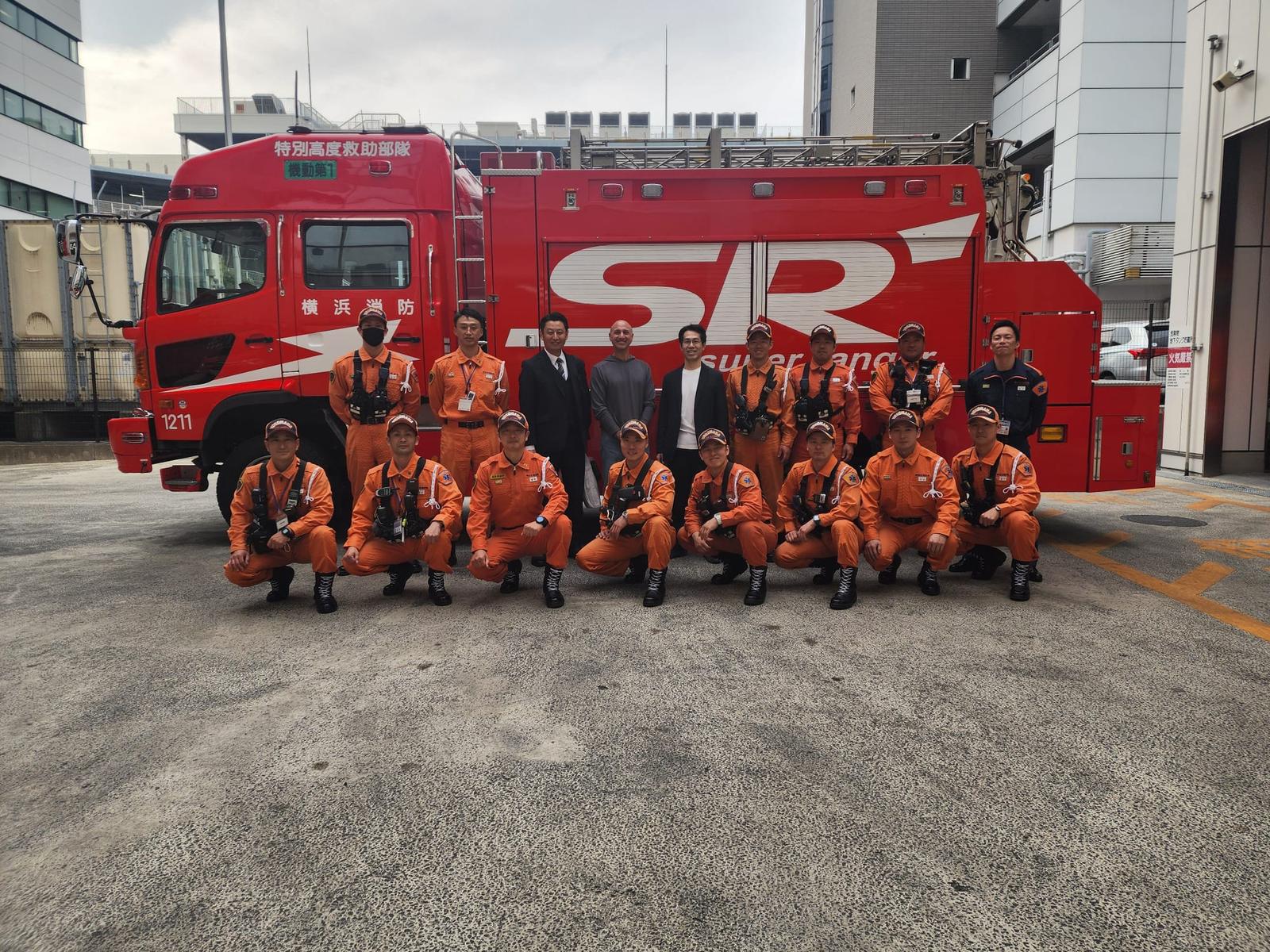
Visit to Japan’s Super Rangers and Coast Guard is an experience I’ll never forget. As Retired Fire Captain Miguel A. Ferrer, a federal medical instructor and urban search and rescue (USAR) specialist with over 30 deployments, I’ve worked with some of the most highly skilled teams around the world. This trip, however, offered a powerful look into how global coordination can elevate rescue operations to a new level.
This experience was made possible through a former student of mine—a doctor and USAR responder in Japan—who I trained years ago during a Medical Team Training (MTT) course. Our reunion overseas became a powerful bridge between U.S. and Japanese emergency response cultures.
Inside the Visit to Japan’s Super Rangers
The visit to Japan’s Super Rangers and Coast Guard began with an in-depth look at Japan’s Special Operations Group. The Super Rangers are an elite tactical unit within the Ground Self-Defense Force, trained in disaster response, counterterrorism, and urban rescue operations.
During live tactical medical exercises, I observed their field casualty response protocols and discussed integrated trauma systems under fire. As a FEMA instructor and former task force medical lead, I appreciated their balance of precision, speed, and care. The alignment in our philosophies reinforced that responder excellence is a global standard.
H2: Visit to Japan’s Super Rangers and Coast Guard – Maritime Rescue Excellence
My visit to Japan’s Super Rangers and Coast Guard continued at sea with the Japan Coast Guard. Their maritime rescue expertise is vital to Japan’s national safety, given its seismic vulnerability and expansive coastline.
We toured operational centers and rescue vessels and reviewed case studies involving typhoons and large-scale evacuations. Their use of drone surveillance, GPS tracking, and live-feed coordination with medical teams was state-of-the-art. Having worked in similar disaster zones, I found their systems deeply effective—and globally applicable.
Miguel Ferrer | Search and Rescue Expert in Disaster ResponseRetired Fire Rescue Captain Miguel A. Ferrer “Find Your Cafecito”: A Ritual of Resilience During USAR OperationsRetired Fire Rescue Captain Miguel A. Ferrer “Find Your Cafecito”: A Ritual of Resilience During USAR Operations Image alt text: Miguel A. Ferrer during visit to Japan’s Super Rangers and Coast Guard
H3: How My Visit to Japan’s Super Rangers and Coast Guard Came Full Circle
This visit to Japan’s Super Rangers and Coast Guard was more than a professional exchange—it was a personal connection reignited. My host was once a student in one of my U.S. training classes. Now, years later, we were colleagues in the field, exchanging ideas and building bonds across borders.
To thank the teams, I gifted a Search Grounds Cuban Coffee Kit, a Surfside deployment challenge coin, and several FEMA/FD patches. These were small tokens that carried big meaning: camaraderie, respect, and shared mission.
H2: Lessons Learned from the Visit to Japan’s Super Rangers and Coast Guard
This experience reaffirmed a belief I’ve carried throughout my career: that global collaboration saves lives. From the streets of Tokyo to the storm-struck neighborhoods of the U.S., we are all part of the same life-saving ecosystem.
The visit to Japan’s Super Rangers and Coast Guard emphasized the importance of training, innovation, and relationship-building. We may operate in different languages and uniforms, but our purpose—and passion—is the same.