Answering the Call: Venezuela Earthquake Response

Miguel A. Ferrer Venezuela Earthquake Response is more than the story of another deployment for me. In June 2026, I deployed to Venezuela as a Medical Specialist with Florida Task Force 2 following the devastating earthquakes that struck the country.
After more than three decades in fire rescue, EMS, emergency management, and Urban Search and Rescue, I’ve learned that no two deployments are ever the same. You arrive prepared, trained, and ready to do your job, but the disaster will always dictate the mission.
Venezuela was no different.
The response brought together US&R teams and disaster professionals from multiple countries. Different uniforms, languages, equipment, and ways of doing things came together with one objective: find people, support the rescue operation, and bring survivors home.
Miguel A. Ferrer Venezuela Earthquake Response with FL-TF2
My assignment was as a Medical Specialist with Florida Task Force 2 (FL-TF2). In a US&R environment, the medical component isn’t simply there to operate a treatment area. Medical Specialists have to be prepared to move forward with rescue personnel and provide care wherever the operation takes us.
That can mean collapsed structures, confined spaces, unstable environments, extreme heat, and long operational periods.
During this deployment, personnel from different teams and countries routinely helped one another. When somebody needed another set of hands, you stepped in.
That’s US&R.
Eight Days Beneath the Rubble
One operation from Venezuela will stay with me forever.
His name was Hernán Gil.
Hernán had survived beneath the rubble for eight days.
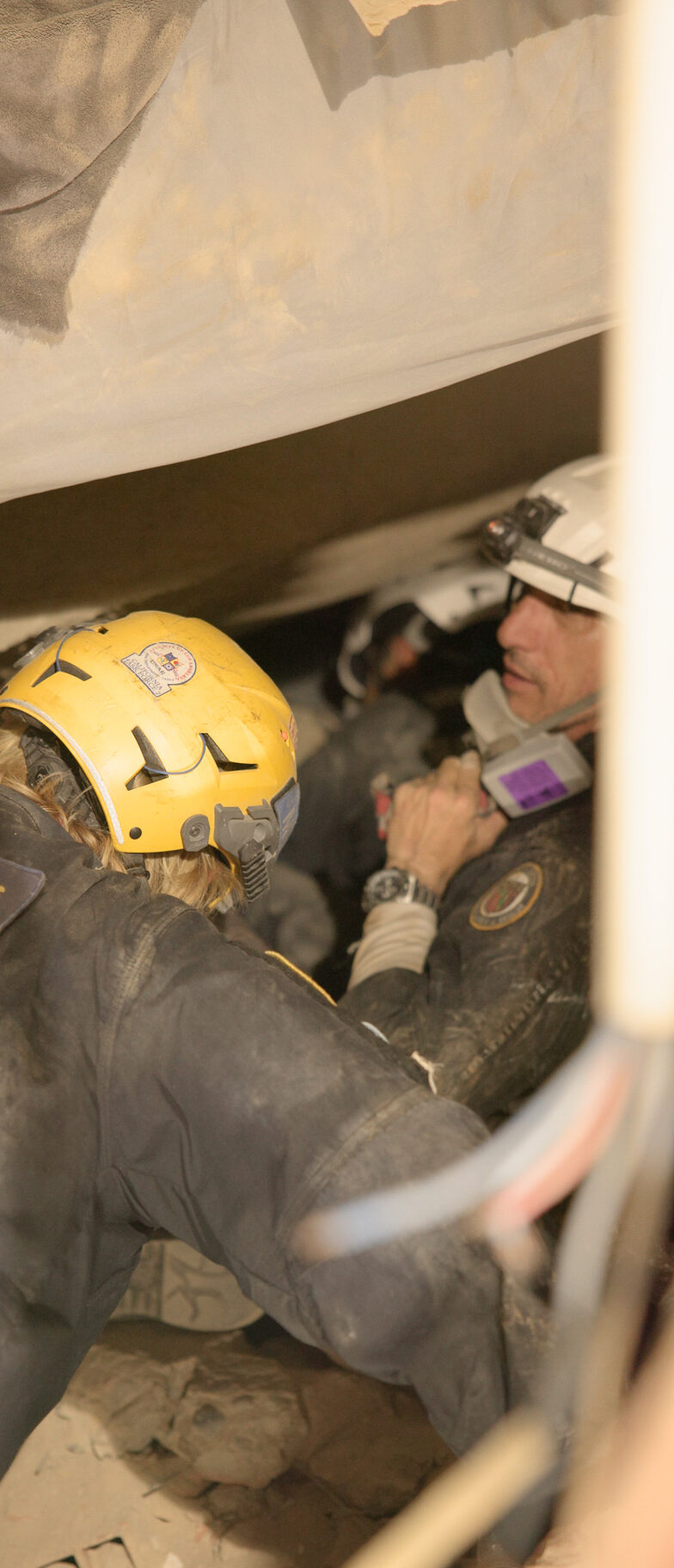
Getting him out required an extraordinary international effort and more than 50 hours of difficult extrication work. Rescuers worked through a challenging and unstable environment to create access and ultimately reach him.
During the final stages of the operation, I entered through the FL-TF2 tunnel and worked my way into the area where Hernán was located. At one point, I went in inverted to get into position and help confirm that he wasn’t pinned before the final movement began.
After eight days beneath a collapsed structure, seeing him alive is something that’s difficult to put into words.
But reaching him wasn’t the end of the mission.
From Rescue to Medical Care
Once Hernán Gil was able to move out of the void, he crawled approximately 15 to 20 feet before we transitioned him to a Stokes basket and moved him to the treatment area.
That’s where the medical side of the rescue took over.
IV access was established, medications were administered, and he was evaluated and monitored following an ordeal very few people could imagine surviving.
For me, that transition from technical rescue to patient care is one of the clearest examples of why the medical component is integrated into a US&R task force.
Rescue and medicine aren’t separate missions in that environment. They have to work together.
International US&R Is Built on Relationships
One of my biggest takeaways from Venezuela had nothing to do with equipment or a medical procedure.
It was the people.
US&R is built on training and capability, but it’s also built on relationships. On an international deployment, those relationships can develop quickly because everyone understands why they’re there.
Different countries. Different uniforms. Different languages.
One mission: bring someone home.
I’ve participated in more than 30 deployments throughout my career, and Venezuela reinforced something I’ve believed for a long time: you never stop learning.
Every deployment teaches you something about operations, logistics, medicine, leadership, teamwork—and yourself.
Lessons From the Venezuela Earthquake Response
The Miguel A. Ferrer Venezuela Earthquake Response also reinforced operational lessons that I’ll carry into future missions and into the classes I teach.
Medical capability needs to be positioned where it can effectively support the task force. Equipment has to be accessible. Treatment space, patient privacy, logistics, communications, and proximity to operations matter. Those details become especially important when a mission shifts from routine task-force medical support to treating a live rescue.
Improving the next response is part of our responsibility after every deployment.
Finding Normalcy in a Disaster Environment
There’s also a side of deployments that doesn’t always make the after-action reports.
Sometimes it’s the little things—a conversation, sharing food, or finding five minutes for a cafecito after hours of working in conditions that are anything but normal.
That’s part of what Search Grounds and Bringing Good Coffee to Bad Places means to me. Something as simple as coffee can create a few minutes of normalcy and connection in a very abnormal environment.
Looking back on the Miguel A. Ferrer Venezuela Earthquake Response, the mission gave me plenty to think about professionally and personally. But when I think about that mission, I keep coming back to Hernán Gil.
Eight days beneath the rubble. More than 50 hours of extrication. Rescuers from multiple countries working toward the same objective.
And finally, a survivor coming out alive.
That’s why we answer the call.